Buy faltenbälge.eu ?
We are moving the project
faltenbälge.eu .
Are you interested in purchasing the domain
faltenbälge.eu ?
domain@kv-gmbh.de · 0541-91531010
Buy faltenbälge.eu ?
What is the correct conjugation?
The correct conjugation of a verb depends on the subject of the sentence and the tense being used. In English, regular verbs typically follow a pattern of adding -ed to form the past tense (e.g., walk becomes walked). Irregular verbs, on the other hand, have unique conjugations that do not follow a set pattern (e.g., go becomes went). It is important to pay attention to the subject of the sentence and the tense being used in order to correctly conjugate a verb. **
What conjugation does "dare" have?
"Dare" is a regular verb in Italian and belongs to the second conjugation. In the present tense, it is conjugated as follows: io do, tu dai, lui/lei dà, noi diamo, voi date, loro danno. **

Similar search terms for Conjugation
Top-Angebote
Products related to Conjugation:
-
Uplift Essentials UV Protection Cooling Arm Sleeves And High Agility Sports Covers UV Protection Cooling Arm Sleeves And High Agility Sports CoversConquer your outdoor adventures and shield your skin from the harsh elements with our premium highperformance protection. Masterfully designed for both men and women, these ultralightweight cooling arm sleeves deliver a dual layer of defense by...55,97 $*Shipping: 0,00 $Secure redirect to the provider
-
Inspire Daily Merch Multicolored Silicone Lids For Mug And Tea Pot, Flexible Covers For Hot Cups Multicolored Silicone Lids For Mug And Tea Pot, Flexible Covers For Hot CupsProtect Your Drink with Multicolored Silicone Lids Keep your coffee, tea, or any hot beverage fresh and covered with these 3pcs Silicone Cup Covers. Designed for use with mugs, tea pots, and coffee cups, these multicolored silicone lids are the...29,97 $*Shipping: 0,00 $Secure redirect to the provider
-
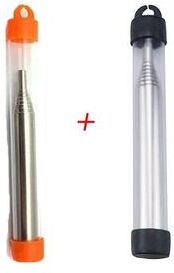
Multicon Wholesale Hub Collapsible Camping Fire Blow Tube Pocket Bellows For Campfires And Survival Kits Collapsible Camping Fire Blow Tube Pocket Bellows For Campfires And Survival KitsGet your fire going faster without leaning into smoke and sparks. This camping fire blow tube set is made for campers, hikers, backpackers, and outdoor survival kits that need a compact tool with real usefulness. Each telescopic fire bellow helps...54,97 $*Shipping: 0,00 $Secure redirect to the provider
-
Drop Dash Deals Magnetic Window Sun Shades, Car Privacy Covers For Front & Rear, UV Protection Shield Magnetic Window Sun Shades, Car Privacy Covers For Front & Rear, UV Protection ShieldSuperior Privacy Protection: Enhance your privacy during car rides with these 4 pcs Magnetic Car Window Shades. These shades effectively shield you and your passengers from prying eyes, allowing you to read, relax, or even sleep without concern....49,97 $*Shipping: 0,00 $Secure redirect to the provider



-
What is conjugation in German?
Conjugation in German refers to the process of changing the form of a verb to match the subject of the sentence. This means that the verb will have different endings depending on whether the subject is "I," "you," "he/she/it," "we," or "they." Conjugation is an important aspect of German grammar as it helps to indicate who is performing the action in a sentence. It is essential for learners of German to understand how to conjugate verbs in order to communicate effectively in the language. **
-
How do I distinguish between the verbs of the E-conjugation and the consonant conjugation?
In Old Norse, the E-conjugation verbs typically end in -a in the infinitive form, while the consonant conjugation verbs end in -a, -i, or -u. Additionally, the E-conjugation verbs have a stem vowel that changes between the present and past tense, while the consonant conjugation verbs have a stem vowel that remains the same. It is also important to note that there are irregular verbs in both conjugations that do not follow these patterns. Therefore, it is important to study and memorize the specific conjugation patterns for each verb. **
-
What does the consonantal conjugation mean?
Consonantal conjugation is a grammatical feature found in Semitic languages, where the root of a verb consists of consonants only, and the vowels are added to indicate different tenses, moods, and aspects. This type of conjugation is characterized by changes in the vowels within the root consonants to convey different meanings. Consonantal conjugation allows for a high degree of flexibility and complexity in verb forms, making it a key feature of Semitic language grammar. **
-
What is the conjugation in German?
Conjugation in German refers to changing the form of a verb to match the subject of a sentence. This means adjusting the verb's ending based on the person (I, you, he/she/it, we, you all, they) and tense (present, past, future). German verbs can have different conjugations depending on these factors, making it important to learn the various verb forms to communicate accurately in the language. **


Is there a language without conjugation?
Yes, there are languages without conjugation. For example, Chinese is a language that does not have verb conjugation. In Chinese, verbs remain the same regardless of the subject or tense. Instead, time expressions or context are used to indicate when an action took place. **
What is the conjugation for French adjectives?
In French, adjectives must agree in gender (masculine/feminine) and number (singular/plural) with the noun they describe. To conjugate an adjective, you add an -e for feminine and an -s for plural. For example, the adjective "petit" (small) would become "petite" in its feminine form and "petits" in its plural form. **
Top-Angebote
Products related to Conjugation:
-
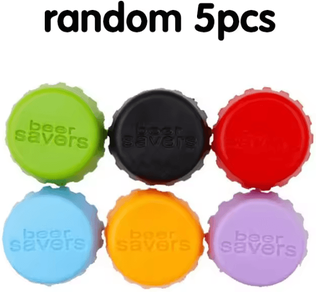
Inspire Curations Reusable Silicone Bottle Cap Covers Airtight Bottle Seals For Beer, Soda & Beverage Bottles random 5pcsKeep your favorite drinks fresh for longer with these silicone bottle cap covers. Designed to create a secure, airtight seal, these flexible bottle covers help preserve the carbonation and freshness of beer, soda, juice, vinegar, soy sauce, and...40,50 $*Shipping: 0,00 $Secure redirect to the provider
-
Hamilton Gas Products Ltd Hand Bellows with TapHand bellows for pressurising systems for test. It has a plain bore tube which fits over a suitable nozzle. The tap allows air to be released slowly, so adjusting the pressure to the required level (after slightly overpressurising the system).24,00 £*Shipping: 5,00 £Secure redirect to the provider
-
Uplift Essentials UV Protection Cooling Arm Sleeves And High Agility Sports Covers UV Protection Cooling Arm Sleeves And High Agility Sports CoversConquer your outdoor adventures and shield your skin from the harsh elements with our premium highperformance protection. Masterfully designed for both men and women, these ultralightweight cooling arm sleeves deliver a dual layer of defense by...55,97 $*Shipping: 0,00 $Secure redirect to the provider
-
Inspire Daily Merch Multicolored Silicone Lids For Mug And Tea Pot, Flexible Covers For Hot Cups Multicolored Silicone Lids For Mug And Tea Pot, Flexible Covers For Hot CupsProtect Your Drink with Multicolored Silicone Lids Keep your coffee, tea, or any hot beverage fresh and covered with these 3pcs Silicone Cup Covers. Designed for use with mugs, tea pots, and coffee cups, these multicolored silicone lids are the...29,97 $*Shipping: 0,00 $Secure redirect to the provider
-
What is the correct conjugation?
The correct conjugation of a verb depends on the subject of the sentence and the tense being used. In English, regular verbs typically follow a pattern of adding -ed to form the past tense (e.g., walk becomes walked). Irregular verbs, on the other hand, have unique conjugations that do not follow a set pattern (e.g., go becomes went). It is important to pay attention to the subject of the sentence and the tense being used in order to correctly conjugate a verb. **
-
What conjugation does "dare" have?
"Dare" is a regular verb in Italian and belongs to the second conjugation. In the present tense, it is conjugated as follows: io do, tu dai, lui/lei dà, noi diamo, voi date, loro danno. **
-
What is conjugation in German?
Conjugation in German refers to the process of changing the form of a verb to match the subject of the sentence. This means that the verb will have different endings depending on whether the subject is "I," "you," "he/she/it," "we," or "they." Conjugation is an important aspect of German grammar as it helps to indicate who is performing the action in a sentence. It is essential for learners of German to understand how to conjugate verbs in order to communicate effectively in the language. **
-
How do I distinguish between the verbs of the E-conjugation and the consonant conjugation?
In Old Norse, the E-conjugation verbs typically end in -a in the infinitive form, while the consonant conjugation verbs end in -a, -i, or -u. Additionally, the E-conjugation verbs have a stem vowel that changes between the present and past tense, while the consonant conjugation verbs have a stem vowel that remains the same. It is also important to note that there are irregular verbs in both conjugations that do not follow these patterns. Therefore, it is important to study and memorize the specific conjugation patterns for each verb. **
Similar search terms for Conjugation
-
Multicon Wholesale Hub Collapsible Camping Fire Blow Tube Pocket Bellows For Campfires And Survival Kits Collapsible Camping Fire Blow Tube Pocket Bellows For Campfires And Survival KitsGet your fire going faster without leaning into smoke and sparks. This camping fire blow tube set is made for campers, hikers, backpackers, and outdoor survival kits that need a compact tool with real usefulness. Each telescopic fire bellow helps...54,97 $*Shipping: 0,00 $Secure redirect to the provider
-
Drop Dash Deals Magnetic Window Sun Shades, Car Privacy Covers For Front & Rear, UV Protection Shield Magnetic Window Sun Shades, Car Privacy Covers For Front & Rear, UV Protection ShieldSuperior Privacy Protection: Enhance your privacy during car rides with these 4 pcs Magnetic Car Window Shades. These shades effectively shield you and your passengers from prying eyes, allowing you to read, relax, or even sleep without concern....49,97 $*Shipping: 0,00 $Secure redirect to the provider
-
Inspired Deals Cooling Cotton Pillowcase Covers For Sweat Protection And Dirt Resistance grayWake up feeling fresher and more comfortable with these soft cotton pillowcases designed for everyday relaxation and cleaner sleep. Made from breathable, skinfriendly fabric, they help reduce sweat buildup while protecting your pillows from dirt and...44,97 $*Shipping: 0,00 $Secure redirect to the provider
-
Inspire Curations Reusable Silicone Bottle Cap Covers Airtight Bottle Seals For Beer, Soda & Beverage Bottles random 20pcsKeep your favorite drinks fresh for longer with these silicone bottle cap covers. Designed to create a secure, airtight seal, these flexible bottle covers help preserve the carbonation and freshness of beer, soda, juice, vinegar, soy sauce, and...53,00 $*Shipping: 0,00 $Secure redirect to the provider
-
What does the consonantal conjugation mean?
Consonantal conjugation is a grammatical feature found in Semitic languages, where the root of a verb consists of consonants only, and the vowels are added to indicate different tenses, moods, and aspects. This type of conjugation is characterized by changes in the vowels within the root consonants to convey different meanings. Consonantal conjugation allows for a high degree of flexibility and complexity in verb forms, making it a key feature of Semitic language grammar. **
-
What is the conjugation in German?
Conjugation in German refers to changing the form of a verb to match the subject of a sentence. This means adjusting the verb's ending based on the person (I, you, he/she/it, we, you all, they) and tense (present, past, future). German verbs can have different conjugations depending on these factors, making it important to learn the various verb forms to communicate accurately in the language. **
-
Is there a language without conjugation?
Yes, there are languages without conjugation. For example, Chinese is a language that does not have verb conjugation. In Chinese, verbs remain the same regardless of the subject or tense. Instead, time expressions or context are used to indicate when an action took place. **
-
What is the conjugation for French adjectives?
In French, adjectives must agree in gender (masculine/feminine) and number (singular/plural) with the noun they describe. To conjugate an adjective, you add an -e for feminine and an -s for plural. For example, the adjective "petit" (small) would become "petite" in its feminine form and "petits" in its plural form. **
* All prices are inclusive of VAT and, if applicable, plus shipping costs. The offer information is based on the details provided by the respective shop and is updated through automated processes. Real-time updates do not occur, so deviations can occur in individual cases. ** Note: Parts of this content were created by AI.